
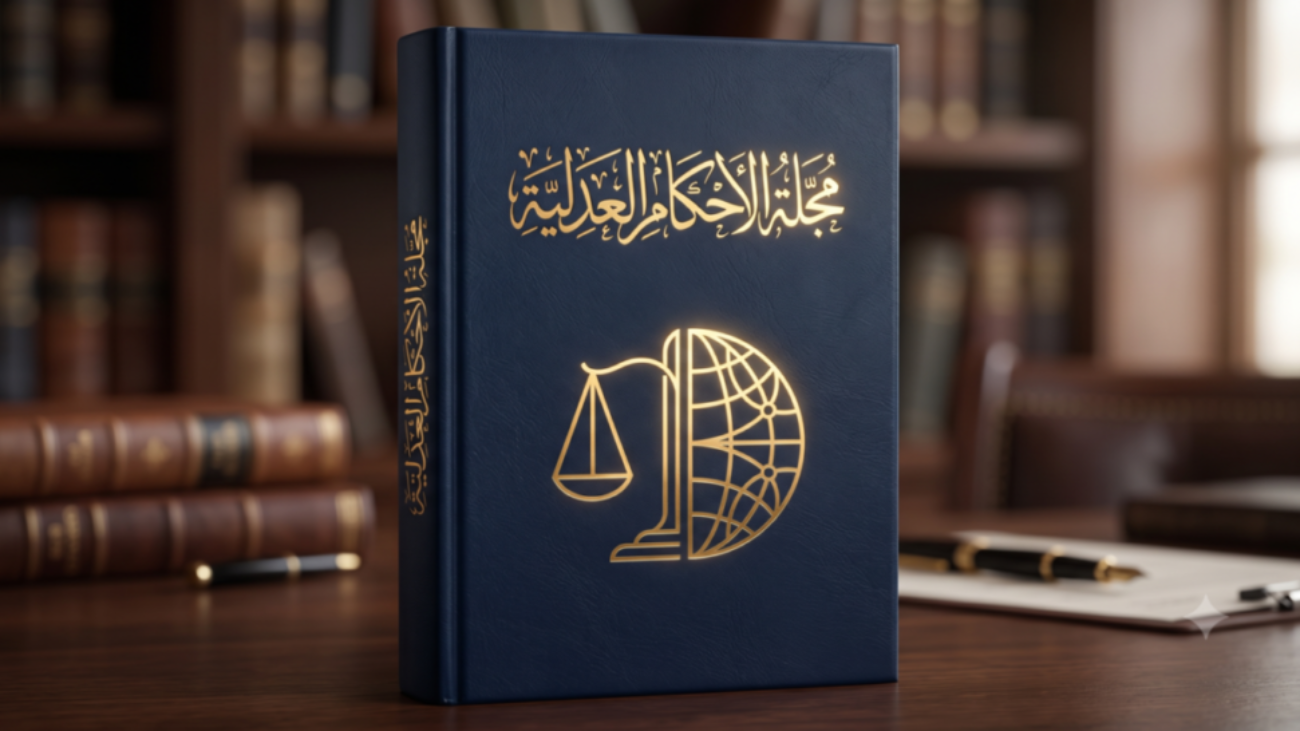
On a dark navy blue matte background, gold foil Arabic calligraphy 'Mecelle-i Ahkâm-ı Adliye' above a modern abstract geometric scale symbol representing global trade.

Article 20 of the Mecelle: Legal Analysis of the Principle “Damage Shall Be Removed”

1. The Maxim, Its Essence, and Islamic Foundations

The Maxim: الضرر يزال Damage shall be removed (Zarar izale olunur)

The Essence of the Maxim: This maxim dictates that a damage that has occurred cannot be left uncompensated legally; to establish justice, that damage must absolutely be removed (eliminated). The grievance of the injured party must be addressed, and the equilibrium that existed before the unlawful situation must be restored.

Islamic Foundations: This principle is derived from the Hadith “There is no harming and no reciprocating harm” (Lâ darara ve lâ dırâr), which forms the bedrock of Islamic tort law. As the great jurist Ali Haydar Efendi points out in his commentary Dürerü’l-Hükkâm (Vol. 1, p. 79), there is a subtle distinction between def-i zarar (preventing damage before it occurs) and izale-i zarar (removing damage that has already occurred). Article 20 focuses specifically on the compensation (daman/tazmin) of damage that has already materialized.

2. Strict Liability, Conditions, and Practical Examples

Ex Lege Effect (Liability Arising Without Explicit Contractual Terms): The most striking legal consequence of this rule is that the obligation to remove damage arises spontaneously from the mandatory nature of the law (ex lege), without needing to be explicitly written in the contract between the parties. Even if commercial parties forget to include an indemnity clause, this maxim fills the contractual silence when a tort or breach occurs.

Strict Liability (Absence of Fault): A critical aspect of this maxim is that it does not strictly require “fault” or “negligence” to trigger compensation. In Islamic law, tort liability is generally based on strict liability (objective responsibility). For instance, Mecelle Article 92 states that a person who directly destroys another’s property is liable for the damage even if it was not intentional. The focus is on the material loss suffered by the victim, not the mental state of the perpetrator.

Practical Examples:

  • Option of Defect (Khiyar al-Ayb): A hidden defect in a purchased good that emerges later constitutes a damage to the buyer. As Ali Haydar Efendi indicates, this damage must be removed. Even without a specific warranty clause, the buyer automatically gains the right to return the good or demand a price reduction proportionate to the defect.
  • Prevention of Interference: Physical damage to one’s property or unjust occupation is immediately halted, and the destruction is compensated, regardless of any prior agreement.

3. Legal Philosophy and the “Certainty” (Yaqin) Barrier

The limits of the “Damage is removed” maxim are drawn by another fundamental philosophical pillar of the Mecelle, Article 4: “Şek ile yakîn zâil olmaz” (Certainty is not dispelled by doubt).

For a damage to be legally removable (compensable), it must have actually occurred, its boundaries must be clear, and it must be certain (yaqin). While the Mecelle clearly states that damage shall be removed, it underlines that this damage must be an actual, certain one. The compensation of future, unrealized damages whose occurrence depends on probability (such as future lost profits) is fundamentally not possible. This principle is one of the pillars of Islamic law, prioritizing certainty and refusing to reward uncertainty (gharar/shakk). The Mecelle refuses to disrupt the certain material status quo for the sake of a doubtful future scenario.

4. Projections in Modern Law, Consequential Losses, and Arbitration

While Western legal systems and Turkish law theoretically allow for the recovery of lost profits (lucrum cessans) and similar items under “positive damages,” these systems, recognizing that this may contradict natural justice, have subjected forward-looking damages to a series of heavy criteria.

The Complexity of Proof and Calculation in Turkish Law: Although the compensation of “lost profit” (as positive damages) is possible in Turkish law, its method and calculation are subject to highly complex procedures.

  • Definition of Positive Damages: The General Assembly of Civil Chambers of the Supreme Court of Appeals (Yargıtay HGK, E. 1990/13-392, K. 17.01.1990) defined positive damages as arising when the creditor waives performance and demands compensation, noting that the contract is not terminated; rather, the right to performance is replaced by the right to compensation for positive damages.
  • Contractual Rescission (Dönme) Situation: In construction contracts, if the contractor fails to perform, the employer may rescind the contract (Turkish Code of Obligations Art. 473). Because this involves rescission, the recoverable damage is “negative damage” (menfi zarar), meaning the employer generally cannot claim positive damages. Conversely, if performance becomes impossible due to a reason attributable to the employer (TCO Art. 485/2), the path is opened for the contractor to claim positive damages upon rescission (as supported by the 15th Civil Chamber, Yargıtay 15. HD, E. 2014/3199, K. 2015/1875).
  • The Calculation Labyrinth: The formula for calculating lost profit is virtually a labyrinth. The Yargıtay (HGK, E. 2010/244, K. 2010/260, T. 12.05.2010) formulated lost profit as: “found by deducting from all the probable income the injured party would have earned had the contract been fulfilled, all the mandatory expense items… the rights saved due to the premature termination, and the total amount of earnings the party made (or deliberately avoided making) from other work during this period.”

US and Anglo-Saxon Law: Expectancy Damages: In US contract law, positive damages are referred to as “expectancy damages,” consequential damages and lost profit is a fundamental component of this compensation. The legal system aims to close the gap between the creditor’s current position and the position they would have been in had the breached contract been fully performed. However, to legitimize this compensation, strict criteria are applied:

  • Proving Lost Profits: Courts require that the profit be calculable with “reasonable certainty”; abstract or speculative estimates are rejected.
  • The Foreseeability Rule (Hadley v. Baxendale): If the breaching party could not have reasonably foreseen this loss of profit at the time the contract was formed, the damage cannot be compensated.
  • Duty to Mitigate: The injured party is obligated to minimize the damage by making reasonable efforts.

The Middle Eastern Context: Saudi Arabia and Iran: The Mecelle’s cautious approach to future damages remains highly relevant in modern Middle Eastern jurisdictions.

  • Saudi Arabia: Historically, consequential losses have been rejected. With the Saudi Civil Transactions Law (CTL) enacted in 2023, the principle of pacta sunt servanda (freedom of contract) has been strengthened. Courts strictly adhere to contractual provisions where parties exclude consequential damages.
  • Iran: In the Iranian legal system, damages must be direct and certain. The recovery of consequential losses and lost profits is highly restrictive, aligning with traditional Islamic legal principles.

Industry Practice: The Relevance of Mecelle’s Provisions: Today, in almost all energy, infrastructure, and EPC contracts globally, parties deliberately insert “Exclusion of Consequential Loss” (ECL) clauses. International corporations voluntarily waive these rights to avoid the protracted litigation and complex calculations caused by the uncertainty of “lost profits.” This proves that the Mecelle’s “only actual and certain damage is removed” approach is de facto applied through contracts in modern mega-projects and is accepted as the most reliable risk allocation method.

5. The Long Road Leading to the Same Conclusion and the Practicality of Liquidated Damages

Western legal systems have attempted to solve the “uncertainty (future profit)” that the Mecelle wholly rejects by navigating a long judicial road, but in most cases, they have reached the exact same conclusion (rejection). After all, how much profit will be made is a forward-looking uncertainty (shakk).

Particularly, the practical counterpart of the “foreseeability” rule put forward in the Hadley v. Baxendale decision in US law remains quite weak. While it might seem logical in one aspect for parties to explicitly consult and draft potential future damages and lost profits from the outset, in practice, it is nearly impossible to transfer this to a contract. It is difficult to draw the boundaries of such a clause that could be added as a “guarantee of mistrust,” and it is hard to find a counterparty who will accept these conditions; even if found, such a speculative risk would need to be insured, and its massive costs would ultimately be reflected back to the employer. Ultimately, in the event of a dispute, claiming compensation based on this clause will often not be directly possible and will require a long, complex trial filled with expert reports.

Therefore, instead of trying to design and impose hypothetical lost profits in a contract; setting a clear and calculable liquidated damages clause to achieve the goal of running the contract smoothly within the specified time is seen as a much fairer, more practical, and more certain solution in commercial life.

References

Freshfields Bruckhaus Deringer, The recovery of damages under Saudi law: understanding the basics.

Ali Haydar Efendi, Dürerü’l-Hükkâm Şerhu Mecelleti’l-Ahkâm, Vol 1.

Yargıtay HGK., E. 2010/244 K. 2010/260 T. 12.05.2010.

Yargıtay HGK., E. 1990/13-392 K. 17.01.1990.

Yargıtay 15. HD., E. 2014/3199 K. 2015/1875.

Turkish Code of Obligations (TCO), Articles 473 and 485/2.

CMS Expert Guide to Consequential Loss Clauses in the Energy Sector: Iran.

CMS Expert Guide to Consequential Loss Clauses in the Energy Sector: Saudi Arabia.

DLA Piper, Overview of the new Saudi Arabia Civil Transactions Law (August 2023).

Hadley & Anor – Baxendale & Ors [1854] EWHC J70

On a dark navy blue matte background, gold foil Arabic calligraphy 'Mecelle-i Ahkâm-ı Adliye' above a modern abstract geometric scale symbol representing global trade.

Article 5 of the Mecelle: Legal Analysis of the Principle “The Fundamental Principle is That a Thing Shall Remain as It Was”

The Maxim, Its Essence, and Islamic Foundations

The Maxim: الأصل بقاء ما كان على ما كان The fundamental principle is that a thing shall remain as it was (Bir şeyin bulunduğu hâl üzere kalması asıldır)

The Essence of the Maxim:

Unless there is definitive evidence to the contrary regarding a right, ownership, or any legal situation, its current state is legally presumed to continue. The burden of proof falls on the party alleging that the current situation has changed. This principle is a fundamental procedural rule that prevents the established order from being disrupted by unfounded claims.

Islamic Foundations: In Islamic legal methodology, this principle is formulated through the doctrine of “Istishab” (the presumption of continuity). Meaning “association” or “seeking a link” lexically, istishab is used as a term to mean the continuation of the existence of something that previously existed, and the continued non-existence of something that did not exist. In a general sense, istishab is defined as the continued validity of a legal ruling that existed in the past, unless there is legal evidence to the contrary.

Regarded as the last of the Sharia evidence, istishab is resorted to only when no other evidence is found. Despite being viewed as a weak proof, istishab provides jurists with latitude in doubtful situations and helps them resolve matters quickly and easily. As Dr. Ahmet Akman points out, istishab serves a protective function for the indication of the previous evidence regarding the existing ruling. In this sense, among the Hanafis, istishab has an averting (protective) nature rather than a proving one, and it does not make a positive contribution to the acquisition of new rights.

2. Causes, Limits, Conditions, and Practical Examples

Istishab is not an absolute material reality, but a procedural shield valid until proven otherwise. As stated in Osman Şahin’s study, five basic principles have been derived from the istishab rule.

Limits and Conditions:

  • Requirement of Certainty (Yaqin): The principle that “certainty is not dispelled by doubt” is directly related to istishab. It means that the absence of a thing whose existence is known with certainty cannot be decreed due to subsequent doubt and hesitation unless there is contrary evidence.
  • Limit of Defense (Averting): While istishab is accepted as a proof for leaving what exists as it is, it is not accepted as a proof to establish something or a right that does not exist.
  • Collapse by Contrary Evidence: Istishab is resorted to only as long as there is no other contrary evidence.

Practical Examples:

  • The Missing Person (Mafqud): Regarding the rights belonging to a missing person whose status of being alive or dead is unknown, the rulings applied to the living are applied unless there is evidence of their death, and their assets are not distributed among the heirs. However, the missing person cannot benefit from istishab in acquiring a new right (proving), such as inheriting from someone else.
  • Absence is the Original State for Accidental Attributes: If a customer who buys an animal on the condition that it is free of defects later claims that the animal is sick and the seller denies this, the burden of proof is on the customer because the illness is an accidental attribute.

3. Legal Philosophy and Universal Logic

The philosophical core of this maxim is the concept of legal certainty. If there were no presumption of protecting the status quo, every right in commercial and social life would constantly be shaken by baseless claims. Under the principle of “freedom from liability is the original state,” which is derived from the rule, it is fundamental that people are born free of liability and debt. It is mandatory for the claimant to present evidence for a person to be indebted or liable. Through this mechanism, the law protects the system against unfounded claims.

4. Projections in Civil Law

The principles derived from istishab constitute the cornerstones of modern law.

  • Presumption of Possession: A person who physically holds a movable property (possessor) is presumed to be its owner until proven otherwise. It is fundamental that the actual state of the property continues.
  • Freedom of Contract: The rule that “the original state in things is permissibility” corresponds to the principle in modern law that everything not prohibited is free. Unless there is evidence that it is legally corrupt or void, the validity of every transaction or contract made is decreed.

5. International Trade and Judicial Applications: The Debate on Arbitration and Interim Measures

In cross-border trade and international arbitration, it is essential to protect existing ownership or possession under the rule that “the fundamental principle is that a thing shall remain as it was.” However, decisions on interim (provisional) measures are a judicial intervention that constitutes an exception to this istishab principle. An interim measure obtained by a claimant—who asserts that a right belongs to them but the property is under the counterparty’s control—before fully proving their claim can prevent the possessor from benefiting from the current situation (istishab). The limits of this exceptional intervention and how the damages will be compensated are a matter of debate in arbitration rules.

Security and Discretion within the Framework of the ICC and International Arbitration Act (MTK):

  • According to Article 6/II of the International Arbitration Act (MTK) of Türkiye, the arbitrator or arbitral tribunal may make the issuance of an interim injunction or interim attachment conditional upon the provision of appropriate security.
  • Similarly, Article 28/I of the ICC Arbitration Rules stipulates that the arbitral tribunal may make any interim or conservatory measure subject to appropriate security being furnished by the requesting party.
  • However, in the ICC Rules, no other conditions (such as rightfulness, urgency, etc.) are mentioned for the arbitral tribunal to grant interim legal protection measures other than security. The absence of any regulation in this regard has been a conscious choice so that the arbitral tribunal can decide according to each specific case. When determining these conditions, ICC arbitral tribunals generally take precedent decisions given in previous proceedings (urgency, risk of significant harm, prima facie case, etc.) as an example.
  • Criticism: It is debatable whether claims of being right at first glance (prima facie) and irreparable harm are sufficient to change a main principle like “the continuation of the existing state” (istishab). Leaving these conditions solely to precedent decisions may undermine the principle of legal certainty. Therefore, it would be beneficial to explicitly state the objective conditions required for granting interim measures in the text of the ICC Arbitration Rules.

ICSID Rules and the Lack of Security:

  • According to Article 47 of the ICSID Arbitration Rules dated July 1, 2022, the arbitral tribunal may recommend provisional measures to protect the rights of the parties, preserve the status quo until the dispute is resolved, or restore it.
  • However, the term “security” is not even included in the relevant ICSID rules (Article 47).
  • Criticism: If an interim measure turns out to be unjustified, the damage suffered by the party whose status quo is disrupted and whose commercial activity is wrongfully halted can reach massive proportions. While the istishab principle (protecting the existing right) is suspended by the interim measure, the failure to secure damages is a deficiency. It is considered that the lack of explicit provision for security practice in the ICSID rules constitutes a contradiction to the istishab principle used to protect the state of possessing an existing right.

Recommendation:

Security is a highly critical insurance for compensating unjustified damages that may arise as a result of interim legal protection measures. We believe that arbitration rules (such as ICC, ICSID, etc.) should set the necessary conditions for granting interim measures—which change the status quo by breaking the istishab presumption—so clearly that it leaves no room for interpretation, including making a certain amount of security mandatory.

References

[1] Akman, Ahmet, “İstishab (Serahsî Özelinde Usûl-Füru’ Karşılaştırması)”, İslam Hukuku Araştırmaları Dergisi, issue 32, 2018, pp. 105-124.

[2] Şahin, Osman, “İslâm Hukuk Metodolojisinde İstishab”, O.M.Ü. İlahiyat Fakültesi, pp. 489-516.

[3] Sarıgül Ata, Bersun, “ICC ve ICSID Tahkim Kuralları Uyarınca Geçici ve Koruyucu Tedbirler”, BÜHFD, Vol. 10, Issue 2, July 2024, pp. 397-418.

On a dark navy blue matte background, gold foil Arabic calligraphy 'Mecelle-i Ahkâm-ı Adliye' above a modern abstract geometric scale symbol representing global trade.

Article 17 of the Mecelle: Legal Analysis of the Principle “Hardship Begets Facility”

The Maxim, Its Essence, and Islamic Foundations

The Maxim: المشقة تجلب التيسير Hardship begets facility (Meşakkat teysîri celb ider)

The Essence of the Maxim: The difficulty and hardship (su’ubat) encountered in a legal matter pave the way for its facilitation (tashil) and alleviation (tahwin). As the great legal scholar Ali Haydar Efendi profoundly expounded in his masterpiece Dürerü’l-Hükkâm, it is essential for the law to flex and provide latitude (wus’ah) during times of distress. This principle ensures that the law transcends being a rigid and purely formalistic set of rules, enabling it to respond to commercial and social needs.

Islamic Foundations: This principle is one of the fundamental universal maxims of Islamic legal methodology (Usul al-Fiqh), known as Al-Mashaqqah tajlib al-taysir. It derives its legal basis from the text (nass) “Allah intends for you ease and does not intend for you hardship” (Surah Al-Baqarah: 185). In fiqh terminology, this situation is embodied in the institution of “Ruhsah” (dispensation/exemption). As accurately defined by Ali Haydar Efendi, a ruhsah is “that which is secondarily legislated upon an excuse”. Although the law establishes strict rules (azimah) as a general principle, in cases where the application of these rules becomes impossible or excessively burdensome, the fiqh dispensations (ruhsahs) underscored by Ali Haydar Efendi come into play.

Causes, Limits, Conditions, and Practical Examples

The “hardship” that requires the law to be flexible is not the subjective difficulty that contracting parties fall into as a result of their own faults, lack of foresight, or ordinary commercial risks. This boundary is strictly drawn in Islamic law by the doctrine of “Umum al-Balwa” (general and widespread affliction) and substantiated with practical examples (furu’) by Ali Haydar Efendi.

Limits and Conditions:

  • Social Impact (Generality): The hardship must not affect just one individual, but must be a macro-level crisis (such as war, famine, or economic depression) that affects the market or society in general.
  • Inevitability (Necessity): It is required that avoiding, taking precautions against, or being protected from the emerging crisis is practically or commercially impossible.
  • No Conflict with Mandatory Rules: The facility to be provided must not take on a nature that completely abolishes the fundamental mandatory rules (jus cogens) of the law.

Practical Examples from the Mecelle: Ali Haydar Efendi analyzes the sub-branches (furu’) of Article 17 through the following concrete commercial examples:

  • Lapse of the Option of Inspection (Khiyar al-Ru’yah): Seeing the outside of a pile of wheat or looking at only a portion of a fabric that is uniform inside and out is sufficient to purchase that good. The buyer’s right to rescind the contract on the grounds of not seeing every single piece lapses. Since examining the entire batch is a hardship that would bring commercial life to a halt, according to Ali Haydar Efendi’s analysis, such a reasonable inspection is deemed legally sufficient, thereby providing facility (taysir).
  • Option of Condition (Khiyar al-Shart) and Option of Payment (Khiyar al-Naqd): The condition that the contract can be terminated if payment is not made within a certain period (khiyar al-naqd), and the granting of the right of withdrawal within a certain period (khiyar al-shart), are exceptional flexibilities created to prevent payment difficulties and commercial grievances that the parties might face. Ali Haydar Efendi grounds the legitimacy of these exceptions directly on Article 17.

Legal Philosophy and Universal Logic (The Philosophical Core)

The primary objective of the law is to establish order; however, this order must not turn into an obstacle that brings social and commercial life to a standstill. The principle that hardship begets facility forms the foundation of legal pragmatism. If the literal application of a strict rule creates a bottleneck (hardship) to a degree that destroys the inherent economic purpose of the contract or transaction, the system must produce an exception from within itself. This philosophy expresses the law’s preference to flex rather than break, in accordance with the principle of sustainability.

Projections in Modern Law (Modern Legal Equivalents)

This maxim continues to exist in contemporary legal systems as principles of the law of obligations and consumer law.

Reflections in Turkish Law:

  • Hardship / Excessive Difficulty of Performance (TCO Article 138): If an extraordinary event, which was unforeseeable by the parties at the time the contract was made, arises and does not result from the debtor’s fault, and demanding performance has become so burdensome as to violate the rules of good faith, the debtor may request the adaptation of the contract. This article is the modern codification of the Umum al-Balwa concept.
  • Mitigation of the Scope of Liability (TCO Article 114): The rule that the judge evaluates liability more leniently if the transaction provides no benefit to the debtor (e.g., courtesy transport, gratuitous mandate) is based on the logic of providing flexibility (taysir) in hardship.

Civil Law:

  • The principle of Clausula Rebus Sic Stantibus (validity as long as circumstances remain the same) and the theory of Imprévision (unforeseeability) in French law grant the judge the authority to adapt the contract to prevent its ruin in cases of excessive difficulty of performance.

Common Law:

  • The doctrines of Frustration of Purpose and Commercial Impracticability provide flexibility to the parties in the event that performance becomes objectively and excessively burdensome.

Contracts for the International Sale of Goods (CISG):

  • In the context of the Duty to Examine the Goods, the buyer is expected to examine the goods within as short a period as is practicable in the circumstances. Similar to the option of inspection (khiyar al-ru’yah) example in the Mecelle, microscopic examinations that would stall commercial life are not demanded.

International Trade and Judicial Applications

Risk allocation, force majeure, and hardship clauses in international trade are the areas where the philosophy of relieving hardship is most intensely applied. Arbitral tribunals separate the concept of hardship from subjective damages and evaluate it within a narrow and objective framework (by the standards of Umum al-Balwa).

Independence of the Arbitration Agreement and Claims of Impossibility:

  • Impossibility and frustration are put forward as a legal basis in objections directed at the substantive validity of arbitration agreements.
  • However, courts and arbitral tribunals, pursuant to the “separability presumption,” accept that the arbitration clause maintains its validity even in situations where the foundation of the commercial contract has collapsed or its performance has become impossible.
  • Supporting this rule, in the Unionmutual Stock Life Ins. Co. of Am. v. Beneficial Life Ins. Co. decision, the court ruled that the defendant’s attempt to rescind the entire contract based on frustration of purpose would not eliminate the arbitration clause. The Commonwealth Edison Co. v. Gulf Oil Corp. decision also confirms this situation.
  • In the context of arbitration procedure, a genuine state of impossibility or frustration is strictly limited to objective disruptions beyond the parties’ control, such as the death of an arbitrator specifically named in the arbitration agreement or the cessation of the selected arbitral institution’s existence.

Force Majeure and Hardship Practice in International Arbitration (ICC) Awards: When examining the arbitral awards rendered within the International Chamber of Commerce (ICC), it is observed that arbitral tribunals tie hardship to objective, societal, and inevitability parameters.

  • While evaluating force majeure, arbitral tribunals strictly require the criteria of the event’s unforeseeability (imprévisibilité), irresistibility (irrésistibilité), and insurmountability (insurmontabilité).
  • Valid macro-level hardship (force majeure) scenarios accepted include armed conflicts (conflit armé), natural disasters (catastrophes naturelles), and state interventions (fait du prince).
  • Within the scope of the frustration of the contract, macro-level crises (Umum al-Balwa) affecting the entire market, such as the hostage-taking of site personnel, extraordinary increases in steel prices, and foreign exchange crises (contrôle des changes), have been taken into consideration by arbitral tribunals.
  • In hardship applications adapting the contract to changing circumstances, the UNIDROIT principles are taken as the basic reference, aiming to keep the contract alive (taysir). In disputes involving commercial contracts where companies based in Türkiye are parties, arbitral tribunals also resort to softening strict performance rules with such precedent ICC criteria.

References

[1] Ali Haydar Efendi, Dürerü’l-Hükkâm Şerhu Mecelleti’l-Ahkâm (Commentary on the Mecelle). [2] Gary B. Born, International Arbitration: Law and Practice, Wolters Kluwer Law & Business, 2012. [3] Jean-Jacques Arnaldez, Yves Derains, Dominique Hascher, Collection of ICC Arbitral Awards 2008-2011, Wolters Kluwer / ICC Publication, 2013.

MAYKANAT global standards - Legal architecture for maritime commerce, energy transition, and complex arbitration.

Hidden Defects and the Status Quo: A Timeless Legal Philosophy for Cross-Border Trade

In the huge web of global supply chains, certainty is one of the most valuable currency. When thousands of solar panels, chips, phones, equipment are shipped from Asia to Europe or when highly calibrated automotive spare parts cross multiple borders, the presumption of their condition at any given moment dictates the allocation of millions of dollars in liability.

Behind the modern framework of cross-border trade lies a timeless legal philosophy regarding the “status quo” and the burden of proof. This philosophy, deeply rooted in the 19th-century Ottoman civil code, the Mecelle, perfectly mirrors the fundamental principles of modern English, Swiss, and Chinese commercial law, and is continuously validated by international arbitral tribunals today.

The Philosophical Core: Soundness as the Ultimate Presumption

To understand the architecture of modern commercial risk, one must look at two foundational maxims from the Mecelle:

Article 9: “Non-existence is the fundamental presumption for accidental attributes.” (Sıfat-ı ârızada asıl olan ademdir.) Article 10: “What is established at a certain time is presumed to continue unless there is evidence to the contrary.” (Bir zamanda sabit olan şeyin, hilafına delil olmadıkça bekasıyla hükmolunur.)

In legal philosophy, “soundness” or “functionality” is the essential attribute of a commercial good. A solar panel is inherently meant to generate electricity; a machine is meant to operate. Therefore, a defect—whether a micro-crack in a photovoltaic cell or a metallurgical flaw in an engine spare part—is an accidental attribute.

Because the law presumes the absence of accidental attributes, the burden of proof inevitably falls on the party claiming the defect. If a buyer accepts delivery of goods without immediate objection, the “status quo” of soundness is legally established.

Modern Equivalents in Global Jurisdictions

This preservation of the status quo is not merely a historical artifact; it is the beating heart of contemporary international law. When a manufacturing hub in Türkiye exports industrial equipment globally, the contracts are governed by diverse legal regimes that reflect this exact philosophy:

  • English Law (Sale of Goods Act 1979): Under English common law, the burden remains strictly on the buyer to prove that a hidden defect existed at the time of delivery. The landmark House of Lords decision in Lambert v Lewis [1982] perfectly illustrates this. The court ruled that while an implied warranty of fitness continues for a reasonable time, the buyer must conclusively prove that the failure (in this case, a defective towing coupling) was due to an inherent flaw present at delivery, rather than subsequent wear, tear, or improper maintenance.
  • Swiss Law (Code of Obligations – OR): Swiss law imposes a strict duty on the buyer to inspect the goods and notify the seller immediately (Art. 201 OR). If the defect is hidden and manifests later, the presumption of continuity works against the buyer unless they can definitively trace the defect back to the manufacturer’s domain.
  • Chinese Law (PRC Civil Code): China’s Civil Code (Article 621) explicitly limits the time frames for claiming hidden defects. If a buyer of electronic components fails to notify the seller of a defect within the agreed inspection period, the law establishes an irrebuttable presumption that the goods were sound and conforming.

The Battlefield of International Arbitration (CISG Precedents)

In international arbitration governed by the United Nations Convention on Contracts for the International Sale of Goods (CISG), the Mecelle’s 10th Article comes to life through CISG Article 36(1). This article states that the seller is liable for any lack of conformity existing at the time when the risk passes to the buyer, even if the defect becomes apparent later.

International tribunals demand rigorous proof from the buyer to break the presumption of soundness. This is heavily supported by established case law:

  • The Vigevano Precedent (Tribunale di Vigevano, Italy, 12 July 2000): In this landmark CISG ruling regarding defective vulcanized rubber used in manufacturing, the court explicitly analyzed the burden of proof. The tribunal ruled that under the CISG framework, it is a general principle of international law that the party relying on a non-conformity (the buyer) bears the absolute burden of proving that the defect existed exactly at the moment the risk transferred.
  • CISG Advisory Council Opinion No. 11: To unify global arbitration standards, the CISG Advisory Council confirmed that the burden of proving a hidden defect lies squarely with the buyer. If a buyer installs imported solar panels and they suffer a 30% drop in output two years later, the buyer cannot rely on circumstantial evidence. They must utilize forensic engineering to prove the degradation was an inherent manufacturing flaw, ruling out accidental attributes arising after delivery (e.g., micro-cracks from turbulent ocean transit, improper grid connection, or weather anomalies).
  • ICC Arbitration Practices on Heavy Machinery: In numerous unrecorded but procedurally identical ICC arbitrations concerning industrial machinery, tribunals consistently reject buyer claims if they fail to bridge the temporal gap. If a machine works flawlessly during the initial commissioning but fails months later, the presumption of continuity (Mecelle Art. 10) dictates that the machine was sound at delivery. The buyer must overcome this by proving a hidden metallurgical or software defect existed prior to shipment.

Strategic Takeaways for Cross-Border Commerce

Executives, general counsel, and global investors operating in or through Türkiye, understanding this philosophical baseline is critical. The allocation of the burden of proof is not just a procedural rule; it is a vital commercial strategy.

When architecting cross-border agreements, companies must:

  1. Define the Defect: Clearly articulate in the contract what constitutes a “manufacturing defect” versus “normal degradation” or “wear and tear.”
  2. Establish Immediate Baselines: Implement rigorous, documented inspection protocols (such as independent SGS testing) at the exact moment risk transfers to lock in the “status quo” of soundness.
  3. Draft Precise Warranties: Create explicit warranty clauses that address the timeline, burden of proof, and necessary forensic methodology for claiming hidden defects.

The party that controls the narrative of the status quo controls the outcome of the dispute. From the ancient caravans of the Silk Road to the modern mega-ships transporting renewable energy infrastructure, the fundamental rule remains unchanged: The law protects the established continuity, and those who claim the contrary must bear the weight of absolute proof.